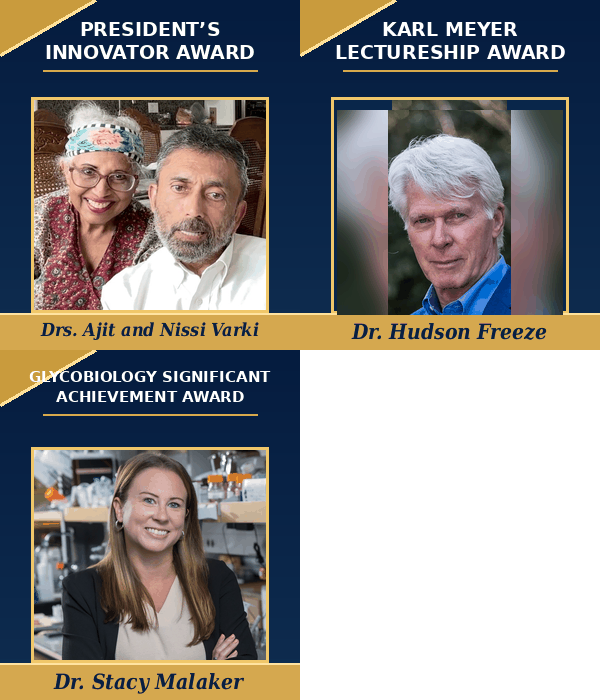
The Karl Meyer Lectureship Award was established in 1990 to honor the distinguished career of Karl Meyer and his outstanding contributions to the field of Glycobiology. This international award is given to well-established scientists with currently active research programs who have made widely recognized major contributions to the field of Glycobiology.
2026 Award Recipient
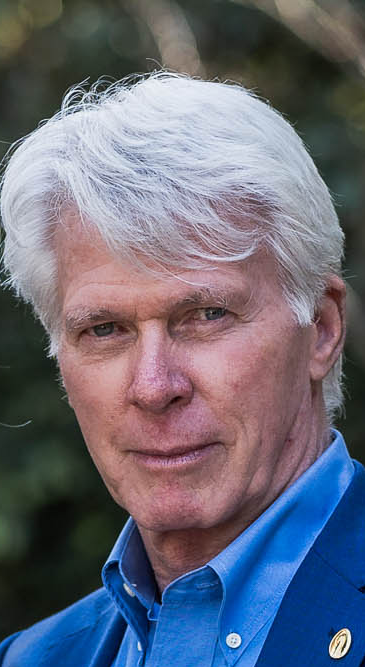
Hudson Freeze, PhD
Director, Sanford Children’s Health Research Center
Dr. Hudson "Hud" H. Freeze credits great mentors for guiding his journey from a small Indiana railroad town to a prolific career in glycobiology. His scientific impact began early. In 1966, as an undergraduate at Indiana University working with microbiologist Thomas Brock, Freeze collected samples from Yellowstone National Park's Mushroom Hot Spring. He successfully isolated the extreme thermophile Thermus aquaticus (Taq). This foundational discovery eventually yielded Taq polymerase, the crucial heat-resistant enzyme that powered the development of the Polymerase Chain Reaction (PCR) and revolutionized modern genetics.
At the University of California, San Diego (UCSD), Freeze studied the carbohydrate nature of the "slime sheath" of Dictyostelium discoideum alongside Bill Loomis and Randy Dimond. This work uncovered lysosomal enzymes containing a unique phosphodiester link (N-acetylglucosamine-α-1-P-Serine and Mannose-6-P-OCH3 on different lysosomal enzymes, a critical steppingstone to his subsequent research on mammalian lysosomal enzymes, mammalian sulfated glycans, and rare lysosomal storage disorders like I-cell disease. He continued this track through post-doctoral work and an Adjunct Faculty position at UCSD, collaborating closely with Stuart Kornfeld, Arnold Miller, and Ajit Varki.
In 1988, Dr. Freeze joined the expanding glycobiology program at the La Jolla Cancer Research Foundation (now the Sanford Burnham Prebys Medical Discovery Institute). Today, he serves as Professor of Glycobiology and Director of the Sanford Children’s Health Research Center. For over 30 years, his laboratory has focused on defining and understanding Congenital Disorders of Glycosylation (CDG). His team has discovered and characterized more than 30 human CDG types, significantly expanding our understanding of heritable genetic diseases.
Notably, Freeze developed the first treatment for a child with a phosphomannose isomerase deficiency (CDG-Ib) based on oral mannose supplementation. He also helped pioneer oral fucose dietary therapy for leukocyte adhesion deficiency. Partnering with the NIH Undiagnosed Diseases Program and Network, his lab has diagnosed roughly 275 CDG patients.
Beyond research, Freeze is renowned for his deep humanitarian commitment, working closely with groups like the CDG Family Network Foundation and CDG CARE to educate clinicians and support families. He has published over 350 scientific articles, served as an author and editor for Essentials of Glycobiology, and won the 2013 Golden Goose Award. A foundational leader in his field, Dr. Freeze served as President of the Society for Glycobiology (2012), President of FASEB, and received the prestigious Rosalind Kornfeld Award in 2016.
View Past Award Recipients →